
Culinary team building game

Who is the master chef

Home > Culinary team building game

More about Culinary team building game

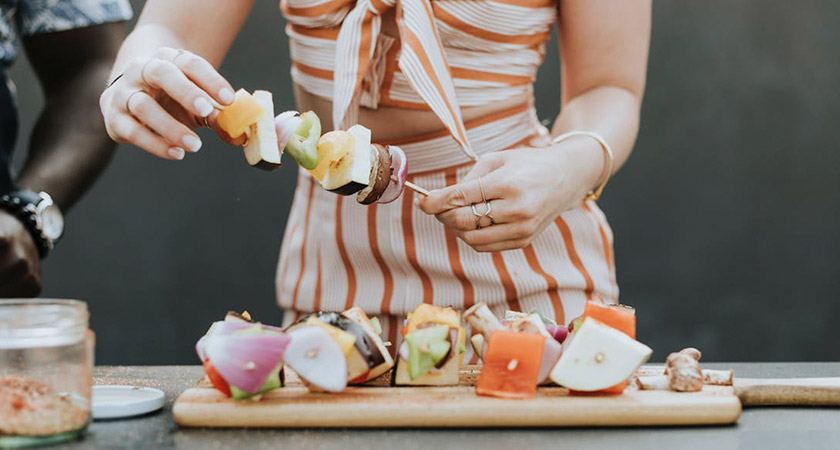
A regular cooking workshop is fun, but let’s face it: it only gets really exciting when there’s something at stake. That’s why a culinary team building game is the perfect mix of cooking, cooperation and a little healthy stress. No quiet recipe following, but working together in a game where timing, consultation and improvisation are at least as important as taste. During this culinary team building, teams compete against each other in a cooking competition or game concept. Think of famous TV cooking programs in which everything seems to happen at once: pans on the fire, a clock ticking and teammates who just had something else in mind. It is precisely in those moments that you see how a team works together – or not.

Everyone has a role. Some automatically take the lead, others keep an eye on the schedule, and still others try to save what can be saved. Whether you have a lot of cooking experience or are normally especially good at tasting: everyone contributes. The little misunderstandings, the quick consultations and the necessary laughter moments make this more than just cooking. This culinary team building game is suitable for teams who want to work on cooperation in a relaxed way, without it feeling heavy or forced. The result is a fun, active team outing where working together comes naturally, the food tastes better because of your own efforts and afterwards you know each other a little better than before.


Yes, I want more information!

What can you expect?

  • cooking, collaboration and a little pressure
  • Who is the chief
  • Everyone has a role
INSPIRATION

Who is the chef: culinary team building game throughout the Netherlands

Ports on, knives at the ready and park egos for now: welcome to the Who's the Chef / MasterChef culinary team building game. During this team outing your team will turn into a fanatical kitchen brigade where everyone suddenly has an opinion - about flavors, timing and leadership. Because cooking together sounds fun, until the clock starts ticking and someone yells, "Who had the sauce anyway?" In teams, you take on the challenge of putting down a dish within limited time that is not only edible, but also impressive. Roles are divided (or not), plans are made (or ignored) and meanwhile, light chaos naturally ensues. Who takes charge? Who guards the time? And who turns out to be especially good at tasting and commenting?

From city to city: culinary talents

Throughout the Netherlands, this culinary team building game takes on its own atmosphere, but the dynamics are recognizable everywhere. In Amsterdam, there is creative cooking. Here everything is "a twist," "fusion" or "deliberately different." That sounds great, until someone wonders what should actually go on the plate. In Utrecht, things are a little more structured. People consult, divide and plan - until it turns out no one had preheated the oven. Rotterdam takes a direct approach. Less talk, more action. Here people work hard and say with conviction that "it will just work". In The Hague, things start out neat and controlled, but as soon as time runs out, diplomacy disappears and fanatical discussions begin about who had agreed what. Eindhoven guarantees smart solutions. Here people improvise, test and sometimes accidentally come up with something genius. In Breda, the focus is on conviviality. Here there is extensive tasting, encouragement and the decision that, above all, "it must be tasty." Groningen brings energy. Everyone participates fanatically and the atmosphere is as lively as the cuisine. And in Maastricht, the game takes on a burgundian touch. A little quieter, a little more refined - until the time pressure hits.

From city to city: culinary talents

Collaboration is pure necessity

What makes this culinary team building game so strong is that working together is not a choice, but pure necessity. You simply cannot all be chefs. Someone has to keep the overview, someone has to execute and someone has to yell at the right moment that it's really not going to work this way. And then there's always that colleague who has appointed himself as "quality controller" and who mainly stands there tasting a lot. Without it feeling like training, it suddenly becomes painfully clear in the kitchen how the team functions under pressure. Who takes charge? Who stays calm? And who panics slightly as soon as time starts to run out? Dividing tasks, listening, adjusting and sometimes accepting that a plan was not as brilliant as it sounded - it all happens here, but with pans, knives and a ticking clock. Fortunately, there is professional guidance that keeps an overview and makes occasional adjustments. Not to take over everything, but to prevent it from derailing completely. Because the choices - and especially the consequences - are all yours. And yes, there are boundary conditions. Fake money budgets, limited ingredients and unexpected twists make creativity and communication suddenly become very serious. "Who spent the money on spices?" is a question that comes back surprisingly often. Then breaks the moment that everyone simultaneously looks forward to and lightly anticipates: the judging. The dishes are looked at, tasted and discussed. Sometimes with visible pride, sometimes with the hope that the jury will swallow them quickly. Here it becomes clear whether planning, working together and improvising have worked - or whether it was mainly a learning experience. But winning is actually secondary. The real result is in cooking together, stressing, laughing and finally sitting at the table together. The resulting stories - about nearly burnt-on sauces, missed timing and brilliant rescues - stick around for a long time. The Who is the Chef / MasterChef culinary team building game throughout the Netherlands is active, fun and surprisingly educational. Not a standard cooking workshop where everyone obediently follows a recipe, but a team outing where cooperation, humor and good food come together. And one thing is certain: afterwards you will never look the same at that one colleague who said beforehand, "Don't worry, I have this totally under control."

.

Collaboration is pure necessity
FAQs

Frequently asked questions

Need help?

Still have questions? Feel free to contact us and we will be happy to help you with advice and suggestions.

You work in teams on dishes and compete against each other in a cooking competition. It's not just about who cooks the tastiest dishes, but above all about working together under light pressure, switching gears quickly and laughing together when something goes differently than planned.

No, cooking experience is not necessary. Anyone can participate. The assignments are designed so that cooperation is more important than cooking talent. Even people who normally don't spend much time in the kitchen have a clear role to play.

Most culinary team building games are suitable for both small and larger groups. The group is divided into teams, usually of a few people per team. For larger groups, multiple teams are formed.

It's a combination. There is an element of play and some competition, but the atmosphere remains relaxed. It is mainly about cooperation and doing something together, not about winning fanatically.

Yes, dietary needs and allergies can almost always be accommodated. Think vegetarian, vegan or specific allergies. This will be coordinated in advance.

This can be done at various locations, such as a cooking studio or an external location. The exact format depends on the group and its wishes.

Yes, definitely. Afterwards, you eat the dishes that were made together. That moment often provides the most conversation and laughter moments.